
Swim With Dolphins Bali: Planning a Memorable Family Experience
Planning a family trip to Indonesia involves choosing activities that cater to different ages, confidence levels, and interests. Experiencing a swim with dolphins Bali outing is often a highlighted dream for traveling parents and children alike. However, organizing a marine wildlife activity for an entire family requires thoughtful preparation rather than a one-size-fits-all approach. Every family member brings their own unique comfort level, curiosity, and physical capabilities to the water.
A rewarding family dolphin experience Bali outing relies on understanding that success does not mean every person must perform identical activities. Whether you are traveling with toddlers, teenagers, or grandparents, careful coordination ensures that everyone feels safe, included, and engaged. By focusing on child preparation, realistic expectations, and respectful animal interactions, you can turn a simple day trip into an inspiring learning adventure for the whole group.
Considering Different Ages and Comfort Levels
When planning dolphin activities for children and adults, parents must evaluate how each family member handles aquatic surroundings and marine life encounters. Age, swimming capability, and emotional readiness vary wildly within a single household.
- Understand Varying Emotional Responses: While one child might eagerly jump into the water, a sibling might feel overwhelmed by the unfamiliar environment or the size of marine mammals. Respecting these emotional differences prevents unnecessary pressure.
- Verify Minimum Age and Companion Rules: Facilities establish distinct age, height, and adult-supervision criteria for safety. Always verify age minimums and required child-to-adult ratios directly with the venue before booking.
- Avoid Forcing Participation: Never force a hesitant child or adult relative to enter the water. Allowing cautious family members to observe comfortably from a dry viewing area creates a far more positive memory than a stressful forced encounter.
- Differentiate Swim Abilities: Comfort on dry land does not always translate to confidence in deeper water. Recognize whether your children need floating aids, shallow platform support, or simply extra parental reassurance.
Tailoring the day to suit the most cautious member of your group guarantees a smoother, more enjoyable outing for everyone involved.
Choosing an Experience That Fits Your Family
Finding the right Bali dolphin experience for families involves assessing how your group prefers to interact with marine life while respecting operational rules.
- Evaluate Group Needs: Consider the age spread of your children, their ability to follow structured verbal directions, and their overall aquatic comfort before choosing how your family will participate.
- Inquire About Diverse Viewing Options: Check with your venue to see if non-participating family members can watch from observation decks or platform areas, allowing the family to remain close even if participation styles differ.
- Consult Venue Coordinators directly: Contact customer support staff to explain your family structure. Ask specific questions about accessibility, shade, seating, and support for younger participants.
- Acknowledge Individual Comfort Boundaries: Remember that a meaningful visit does not require every single person to get wet. Observers and active participants can enjoy the day equally when expectations are set properly.
Preparing Children Before the Visit
Preparing young travelers before arrival helps lower anxiety and fosters positive behavioral patterns around animals. Using clear, encouraging language helps children know what to expect during your planning a family dolphin visit.
- Explain the Setting Simple Words: Walk your children through the sequence of events—arriving, changing, listening to the trainers, and taking turns—so they feel familiar with the routine.
- Emphasize Listening to Trainers: Teach children that animal trainers are there to keep both the family and the dolphins safe. Explain that following trainer directions immediately is mandatory.
- Teach Respectful Animal Boundaries: Remind children that dolphins are living creatures, not toys. Emphasize that we must never reach out, splash, touch, or feed animals without explicit permission from staff.
- Encourage Open Communication: Let your children know it is completely okay to feel nervous and that they can voice their feelings or step back at any point.
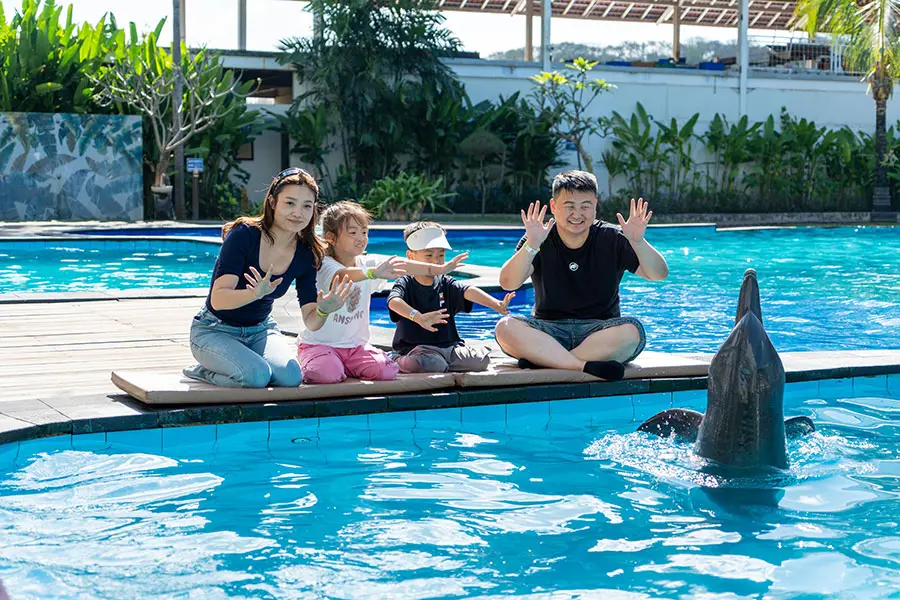
You can use simple, reassuring phrases with your children during preparation:
- “We will listen carefully to the trainer at all times.”
- “You can ask questions whenever you are unsure about what to do.”
- “We should respect the dolphins and follow all the facility rules.”
- “You do not have to hide it if you feel nervous; we can take a break.”
Organizing Family Logistics for a Smooth Visit
Managing family activities in Bali requires careful logistical planning to keep energy levels high and stress levels low, particularly when traveling with younger children.
- Confirm Arrival Times and Scheduling: Double-check your schedule and plan to arrive well in advance. Rushing through check-in and changing rooms can cause unnecessary anxiety for kids.
- Pack Practical Family Essentials: Bring appropriate swimwear, extra dry clothes, sun protection, necessary towels, and any required personal documents or confirmation vouchers.
- Check Companion and Viewing Policies: Clarify beforehand where non-participating family members, grandparents, or younger toddlers can wait comfortably while others join in-water sessions.
- Pace Your Day Wisely: Marine activities and sun exposure can tire young children quickly. Avoid scheduling heavy sightseeing tours or lengthy road trips immediately after your dolphin session. Allow time for rest and casual meals.
Turning the Experience Into a Learning Opportunity
A marine wildlife visit is an ideal occasion to integrate dolphin education for kids, sparking curiosity about marine biology, conservation, and environmental stewardship.
- Encourage Curious Observation: Encourage children to observe how dolphins move, breathe, and communicate with each other and their trainers.
- Prepare Questions Together: Before your trip, brainstorm questions with your children about dolphin habits, diet, and ocean habitats that they can ask educational staff.
- Distinguish Between Observation and Interaction: Help kids understand that observing animals naturally and learning about their ecosystems is just as valuable as direct interaction.
- Debrief as a Family: After your visit, talk together over a meal about what everyone learned, what surprised them, and how people can help protect marine environments in their daily lives.
Respecting Dolphins and Supporting a Positive Family Experience
Fostering a respectful mindset ensures both guest safety and animal welfare during a family wildlife experience Bali trip.
- Follow Trainer Cues Strictly: Trainers understand animal behavior best. Ensure every family member adheres strictly to hand signals, positioning guidance, and safety rules.
- Maintain Calm Behavior: Teach children to avoid loud shouting, rapid sudden movements, or splashing near the water, as quiet surroundings support a serene environment for animals and guests.
- Accept Unpredictable Natural Responses: Recognize that marine animals have natural rhythms and individual temperaments. Direct touching or specific physical responses are never guaranteed and should never be demanded.
- Prioritize Wellbeing Over Photos: Do not push a hesitant child into a posture or position simply to capture a photograph. A child’s emotional comfort and safety must always come first.
Planning Your Visit to Bali Exotic Marine Park
When coordinating your family itinerary for a swim with dolphins Bali excursion, Bali Exotic Marine Park serves as an prominent local destination to research. Parents gathering insights on logistics, guest feedback, and facility layouts can review the Tripadvisor page for Bali Exotic Marine Park to gain valuable perspectives from previous family travelers.
While browsing traveler reviews on Tripadvisor helps parents picture the general visitor flow and family atmosphere, guest reviews should never replace official guidelines. Always contact the destination directly to verify current minimum age policies, child supervision rules, accessibility features, and booking terms before finalizing your travel arrangements.
Conclusion: Creating a Meaningful Family Swim With Dolphins Bali Experience
Organizing a family swim with dolphins Bali trip is about bringing people together for an enriching, well-planned adventure. By honoring individual age requirements, preparing children with clear boundaries, maintaining thoughtful logistics, and treating marine life with utmost respect, parents can ensure a smooth and memorable outing.
Remember that a successful visit does not depend on every family member engaging in direct in-water interaction; shared learning, joyful observation, and mutual comfort are what make the trip truly worthwhile. To begin planning your family trip, explore visitor insights on the Tripadvisor page for Bali Exotic Marine Park and contact the facility directly to confirm all age and safety guidelines prior to your visit.
Frequently Asked Questions (FAQ)
1. Is Swimming With Dolphins in Bali Suitable for Families With Children?
Yes, marine visits can be wonderful for families, provided parents check specific age requirements, swimming criteria, and supervision policies established by the venue beforehand.
2. How Can Parents Prepare Children for a Dolphin Experience?
Parents can explain the routine in simple terms, stress the importance of following trainer directions, practice calm animal interaction rules, and reassure children that voicing fear is completely okay.
3. Do Children Need to Meet Specific Age or Swimming Requirements?
Requirement policies vary by venue and activity tier. Some options utilize shallow standing platforms or flotation devices, while others require independent swimming abilities and minimum age limits. Always verify requirements directly with the provider.
4. Can Family Members Choose Different Levels of Participation?
Yes. Often, some family members can participate directly while others watch comfortably from viewing areas, allowing the family to enjoy the outing together regardless of individual comfort levels.
5. What Should Families Bring for a Dolphin Experience in Bali?
Families should bring comfortable swimwear, dry change clothes, towel sets, sun protection, booking confirmations, and any necessary personal health items.
6. What Can Children Learn From a Dolphin Visit?
Children can learn about marine mammal physiology, echolocation, animal care practices, ocean conservation, and the importance of respecting living creatures in their environments.
7. Can Family Members Stay Nearby if They Do Not Participate in the Activity?
Most established facilities provide designated observation or deck areas where non-participating relatives can watch the experience safely from dry land. Check with your venue to confirm observer access rules.
8. How Can Families Make a Dolphin Experience Safe and Respectful?
Families maintain safety and respect by following trainer instructions carefully, remaining calm, avoiding sudden noises or unauthorized contact, and placing animal welfare and child comfort above photo opportunities.