
Swimming With Dolphins Bali: Memories Beyond the Camera
For many travelers visiting Indonesia, experiencing a swimming with dolphins Bali excursion stands as one of the most anticipated highlights of their trip. The desire to capture these rare moments on camera is entirely natural; photographs preserve vacation milestones and allow us to share incredible stories with friends and family back home. However, when the pursuit of the perfect digital shot becomes the primary focus of an outing, it is easy to miss the quieter, more fascinating details happening right in front of us.
A truly immersive Bali dolphin swimming experience offers far more than a simple photo opportunity. Beyond the lens lies an opportunity to observe unique marine mammal behaviors, listen closely to professional trainer insights, practice calm awareness in an aquatic setting, and forge a deep, personal memory of the moment. By balancing the wish for keepsake documentation with present-moment awareness, visitors can transform a routine tourist activity into a deeply meaningful encounter.
Looking Beyond the Camera During a Dolphin Experience
In an age dominated by smartphones and social media, travelers naturally feel pulled toward documenting every stage of a vacation. Capturing photos during a dolphin interaction Bali session provides a tangible souvenir of your journey, but shifting your primary focus away from the viewfinder allows you to experience the visit with all your senses.
- The Difference Between Documenting and Experiencing: Looking at an animal through a camera screen creates a subtle barrier between you and the environment. Stepping back from the camera allows you to take in the full scale of the habitat, the texture of the water, and the natural rhythm of the session.
- Sharpening Environmental Awareness: When you are not preoccupied with framing a photo, your attention naturally expands. You become more attuned to the trainer’s subtle hand signals, the sound of surface respiration, and the movement of the water around you.
- Coexisting with Camera Policies: Prioritizing present-moment awareness does not mean ignoring photos entirely. Most structured programs include designated media capture moments. By trusting facility guidelines and dedicated photographers, you free yourself to focus purely on the interaction itself.
Ultimately, a photograph is a tool to help you remember an event, but the quality of the memory itself depends on how present you were while it happened.
Observing Dolphins Through the Experience
One of the richest aspects of a Bali dolphin experience is the opportunity for active, thoughtful observation. When you are free from camera distractions, you can observe marine mammal biology and behavior as it unfolds in real time.
During a guided session, take time to quietly notice:
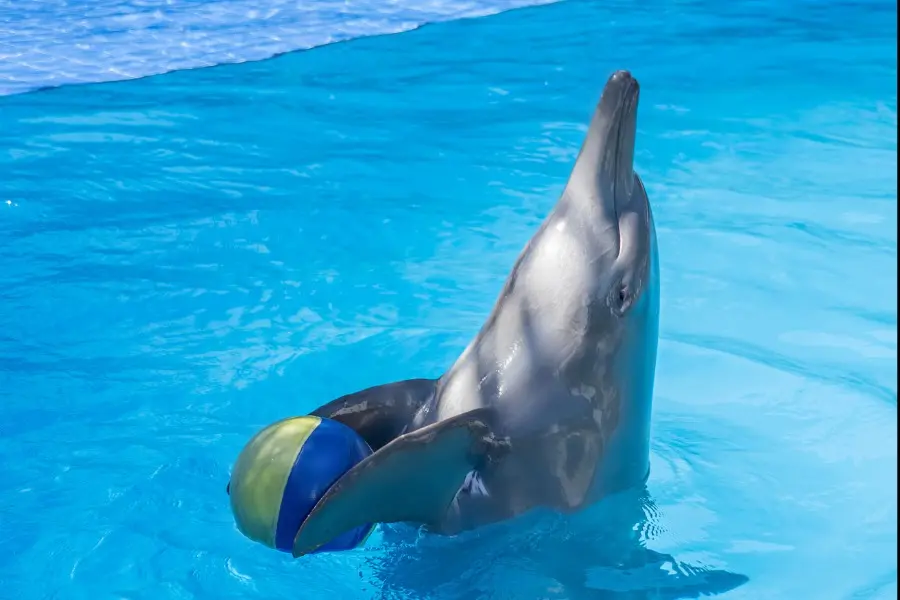
- Fluid Aquatic Kinematics: Watch how dolphins use their powerful tail flukes for vertical propulsion and their pectoral fins for precise steering and balance in the water.
- Surface Respiration: Listen for the distinct, rapid exhalation and inhalation sequence as the animal surfaces to breathe through its dorsal blowhole.
- Contextual Environmental Responses: Observe how the dolphin responds to trainer cues, environmental stimuli, and the presence of human participants in the water.
Avoiding Behavioral Overinterpretation
It is essential to observe marine life through an objective lens rather than projecting human emotions onto animal movements. For example, the natural physical structure of a dolphin’s rostrum gives the impression of a permanent smile, which is an anatomical feature rather than an expression of human joy. Similarly, movements like tail-slaps, jaw-clapping, or sudden directional changes must be evaluated within their specific environmental and training context. Viewing these animals objectively fosters a mature, science-based respect for their complex biological nature.
Listening to the Trainer Makes the Experience More Meaningful
A guided swim with dolphins Bali session is as much an educational lesson as it is an aquatic activity. The animal care trainers guiding your session bring years of experience in behavioral conditioning, marine biology, and daily animal management.
Listening attentively to your instructor enriches your visit in several key ways:
- Understanding Behavioral Conditioning: Trainers explain how positive reinforcement functions during daily care, demonstrating how primary rewards (such as fish) and secondary reinforcers encourage voluntary cooperation.
- Gaining Biological Insights: Staff frequently share facts regarding dolphin anatomy, dietary requirements, echolocation mechanics, and pod dynamics.
- Ensuring Session Safety: Clear instructions establish precise spatial boundaries, touch protocols, and entry/exit procedures that protect both guests and animals.
Engaging with trainer explanations transforms a simple interaction into an active learning opportunity, helping you appreciate the structured care and training behind every session.
Being Present During Every Part of the Session
Fully enjoying a dolphin encounter experience Bali session means embracing the entire process rather than waiting for a single, scripted pose or photo opportunity.
To cultivate present-moment awareness during your visit:
- Focus During Pre-Session Orientations: Treat the initial safety orientation as the beginning of the experience rather than a administrative formality. Use this time to mentally prepare and get comfortable.
- Engage Your Senses: Take in the auditory cues—such as the sound of surface splashes and trainer bridge whistles—and focus on the feel of the water as you step onto the platform.
- Release Expectations for Specific Poses: Wildlife encounters are dynamic and managed under strict animal welfare guidelines. Enjoying whatever behavioral sequence occurs naturally yields a far more authentic memory than fixating on a specific photo stance.
- Value the Transitions: Pay attention during transitional moments, such as entering the pool deck, waiting for your turn, or observing other participants. Every stage contributes to the story of your day.
Respecting the Experience and Its Boundaries
A meaningful experience is inherently rooted in respect—respect for the animals, the trainers, and the operational boundaries of the facility.
- Adhering to Trainer Direction: Always wait for explicit verbal cues or hand signals from your instructor before reaching out or changing your physical position in the water.
- Honoring Touch Boundaries: Trainers explicitly outline which areas of the dolphin’s body may be gently touched and which areas (such as the blowhole, eyes, and mouth) are strictly off-limits.
- Complying with Camera Rules: Respect facility guidelines regarding personal smartphones, GoPros, or external cameras in animal zones. Safety rules regarding photography exist to prevent loose items from falling into habitats and distracting the animals.
- Prioritizing Safety Over Scenarios: Never push past established safety barriers or request unsanctioned animal poses for the sake of a photograph. True appreciation means honoring the animal’s comfort above all else.
Bringing Home Memories Beyond Photographs
When your vacation concludes and you return to daily life, the most enduring takeaways from your swimming with dolphins Bali journey will often be the intangible ones.
Long after digital photo files are stored away in cloud drives, what remains is:
- A Grounded Understanding of Marine Life: The scientific facts you learned regarding mammal respiration, bioacoustics, and positive reinforcement care.
- An Appreciation for Animal Welfare: A heightened awareness of the responsibilities involved in human-animal interactions and the importance of respecting living creatures.
- A Sense of Personal Presence: The quiet satisfaction of knowing you were fully present in the moment, experiencing the encounter through your own eyes rather than a camera screen.
Connecting Your Experience to Bali Exotic Marine Park
For travelers seeking a structured, facility-based setting in South Bali, Bali Exotic Marine Park (BEMP) in Denpasar offers guided in-water options such as its signature Discovery program.
According to official facility information, the Discovery program provides an instructor-led experience where participants enter submerged pool platforms to observe, listen to trainer briefings, participate in guided interactions, and observe feeding sessions.
Rather than viewing BEMP purely as a backdrop for souvenir photos, visitors can approach the Discovery program as an educational session. Focusing on the trainer’s educational talks, observing physical adaptations up close, and following guided interaction rules allows guests to enjoy a well-rounded, observant visit.
Conclusion: Make Your Swimming With Dolphins Bali Experience More Meaningful
A rewarding swimming with dolphins Bali excursion is defined not by the number of digital images saved on your camera roll, but by the depth of your presence during the encounter. By stepping back from the lens, observing animal mechanics with quiet curiosity, listening attentively to professional trainers, and respecting operational boundaries, you create a memory that goes far beyond a simple photograph.
When planning your visit, take time to explore program options thoughtfully. To learn more about guided in-water sessions, review detailed activity rules, and verify up-to-date program schedules, consult the official Bali Exotic Marine Park Website.
Traveler Review & Policy Notice
When researching venue options online, prospective guests can read Bali Exotic Marine Park reviews on Tripadvisor to examine independent traveler feedback regarding staff service, check-in flow, and facility layout. Please note that Tripadvisor currently displays an operational notice regarding animal welfare standards for commercial wildlife venues. Conscientious travelers should evaluate user feedback alongside official venue guidelines and independent welfare considerations when deciding whether to book a visit.
Frequently Asked Questions (FAQ)
1. How Can You Enjoy Swimming With Dolphins Without Focusing Too Much on Photos?
You can focus on present-moment awareness by listening closely to trainer briefings, actively observing the dolphin’s physical movements and breathing patterns, trusting designated media staff for photo capture, and releasing expectations for specific scripted poses.
2. Why Is It Important to Listen to Trainers During a Dolphin Experience?
Listening to trainers is essential because they provide vital safety rules, touch boundaries, and biological context. Following their guidance ensures a safe environment for both participants and animals while enriching your understanding of marine mammal behavior.
3. Can You Still Take Photos During a Dolphin Swimming Experience?
Yes, photography rules depend on the specific program package and facility guidelines. Many venues assign dedicated media staff or provide designated camera moments, allowing guests to focus entirely on the interaction during active in-water phases.
4. What Makes a Dolphin Experience Memorable Beyond Photographs?
An experience becomes memorable through active observation of animal movement, learning scientific facts about cetacean biology, feeling the sensory atmosphere of the habitat, and practicing respectful awareness in a unique aquatic setting.