Beyond the Dolphin Swim: What You Can Learn From a Bali Dolphin Experience
When travelers plan a tropical getaway, a Bali dolphin experience is often at the top of their itinerary. For many, the initial expectation revolves entirely around the thrill of getting close to these magnificent marine mammals and capturing memorable photos. However, an interaction with dolphins has the potential to offer so much more than just a fun swim.
Engaging with dolphins in a structured environment can be a profound opportunity to understand marine life on a deeper level. First-hand experiences make learning about marine mammals feel tangible and real in a way that documentaries or books cannot replicate. By shifting your focus from simply swimming to actively observing, you can transform your visit to facilities like Bali Exotic Marine Park into a valuable educational journey.
What Can You Learn From a Bali Dolphin Experience?
A well-guided dolphin experience Bali offers is a gateway to practical marine education. Rather than just memorizing a list of facts about ocean life, visitors have the chance to learn through direct observation. The learning opportunities encompass a wide range of topics, including dolphin behavior, intricate communication methods, the principles of animal welfare, and the broader marine environment.
The true value of this experience lies in what you can observe and understand while sharing the water with these intelligent creatures. By paying attention to how they interact with their surroundings, their peers, and their trainers, you gain a newfound appreciation for their complexity.
Understanding Dolphin Behavior
One of the most fascinating aspects of a Bali dolphin experience is the chance to witness dolphin behavior Bali marine specialists study daily. You can observe firsthand how dolphins navigate their environment, utilizing their hydrodynamic body shapes to move with incredible agility and grace.
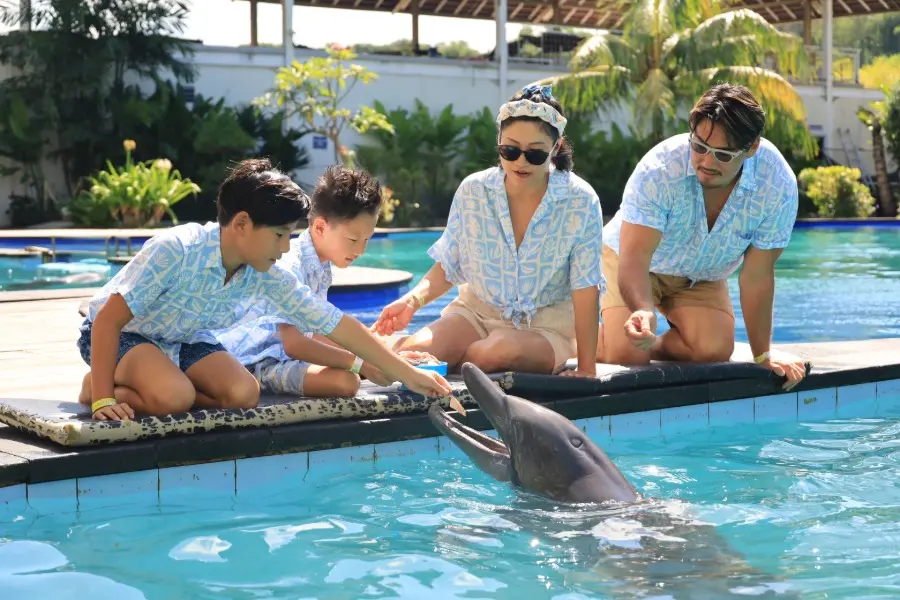
Observing behavior is crucial because it reveals the physical and cognitive capabilities of the animal. During your visit, you will notice how trainers help visitors interpret the behaviors they are seeing, explaining why a dolphin might swim in a certain pattern or how they investigate new objects. Visitors are highly encouraged to focus on these behavioral nuances rather than solely prioritizing physical interaction. Watching a dolphin problem-solve or exhibit curiosity offers a far richer takeaway than a simple touch.
Learning How Dolphins Communicate
Dolphins are famous for their high intelligence and complex social structures, which require sophisticated communication. Through a carefully guided interaction, visitors can gain an introductory understanding of dolphin communication.
Dolphins use a diverse array of methods to convey information. This includes vocalizations like whistles, clicks, and squeaks, but it goes far beyond just sound. Body movements and behavioral signals—such as jaw pops, bubble blowing, or slapping the water with their flukes—are all vital components of how they communicate with one another. During an educational dolphin experience, visitors can begin to recognize that these animals possess a highly developed, multi-layered communication system that goes far beyond simple animal noises. For more information about dolphin communication, behavior, and echolocation, visitors can also explore the NOAA Fisheries guide to common bottlenose dolphins.
What Trainer Interaction Can Teach Visitors
The role of the marine mammal trainer extends far beyond simply managing the activity; they are essential educators. Observing the trainer interaction teaches visitors how humans and marine mammals can build relationships based on trust, positive reinforcement, and mutual respect.
Trainers are there to explain the specific behaviors you are witnessing and to provide a structured environment for the interaction. They explain why visitors need to follow specific directions—such as keeping hands flat or remaining calm in the water. By listening to the trainers, you learn that they are not just activity coordinators, but knowledgeable professionals who translate the dolphins’ actions and moods for the public, turning a recreational visit into an interactive marine biology lesson.
Understanding Animal Welfare Through Experience
A crucial takeaway from any responsible animal encounter is the importance of animal welfare. A Bali dolphin experience is an excellent practical lesson in understanding that interacting with wildlife comes with strict boundaries and necessary rules.
Visitors learn firsthand why calm behavior, following trainer instructions, and respecting the animals’ personal space are absolute requirements. Animal welfare means never forcing an interaction; the animals must be willing participants. By participating in a structured program at places like Bali Exotic Marine Park, guests can observe how welfare-focused environments prioritize the health, safety, and comfort of the dolphins over visitor entertainment, teaching a vital lesson in respecting wildlife boundaries.
From Dolphin Interaction to Marine Education
Learning about dolphins naturally paves the way for broader marine education Bali initiatives. Dolphins are often considered ambassadors for the ocean. By understanding this single, highly visible marine species, visitors can better comprehend the delicate balance of ocean ecosystems.
When you learn about a dolphin’s diet, their need for clean water, and their social structures, it becomes easier to understand how environmental changes impact all marine life. A meaningful dolphin encounter shifts the perspective from a localized experience to a broader awareness of the marine environment, fostering a deeper respect for ocean habitats worldwide.
Why First-Hand Learning Can Be Different
There is a distinct difference between reading about marine life and experiencing it. While textbooks and documentaries provide excellent foundational knowledge, seeing a dolphin’s behavior directly makes the information uniquely memorable.
Hearing the actual sound of a dolphin’s breath from its blowhole, feeling the displacement of water as it swims past, and seeing the intelligence in its eyes creates an emotional connection to the educational material. This direct observation anchors the facts in reality, making the educational experience far more impactful and long-lasting than passive learning.
What Families and Children Can Take Away
For families, a Bali dolphin experience is a powerful tool for introducing younger generations to marine life. Children are naturally curious, and a supervised, interactive setting encourages them to observe closely, ask insightful questions, and practice active listening with the trainers.
It is an opportunity for family learning where children discover the importance of gentleness and respect for animals. Watching how animals respond to calm, quiet behavior teaches children empathy and self-regulation. By following the official program guidelines regarding age and eligibility, families can ensure that their children receive an age-appropriate, awe-inspiring introduction to marine biology.
What Visitors Should Pay Attention To During the Experience
To ensure your visit is as educational as it is enjoyable, it helps to approach the encounter with an observational mindset. Instead of just thinking, “I swam with a dolphin,” aim to leave thinking, “I learned something profound about dolphins.”
Here is an observation guide to maximize your learning during the experience:
- Dolphin movement: Notice how they use their flukes (tails) for power and their pectoral flippers for steering.
- Body language: Look for signs of curiosity, playfulness, or relaxation.
- Vocal behavior: Listen closely for the different sounds they make above and below the water.
- Responses to trainer cues: Observe the focus and rapid cognitive processing when interacting with their trainers.
- Social behavior: If multiple dolphins are present, watch how they swim in sync or interact with one another.
- Interaction boundaries: Note how trainers ensure the dolphins have the space and choice to engage.
- Environmental surroundings: Observe the habitat and the overall calmness required to maintain a positive environment.
Turning a Dolphin Experience Into a Responsible Travel Lesson
Participating in an educational dolphin experience also serves as a practical lesson in responsible travel. Visitors learn that engaging with animals requires a conscious effort to respect wildlife.
Taking home an understanding of responsible tourism means recognizing that ethical interactions rely on strict guidelines. By adhering to the rules set by marine parks, visitors actively participate in a model of tourism that values animal welfare. This mindset can then be applied to future travels, encouraging visitors to always seek out educational and respectful wildlife encounters.
Why Bali Exotic Marine Park Can Be Part of the Learning Journey
For those seeking an experience that balances interaction with genuine learning, Bali Exotic Marine Park provides a fitting context. The park emphasizes the educational aspects of their programs, ensuring that visitors walk away with more than just photographs.
Through guided sessions, the trainers at Bali Exotic Marine Park share insights into marine education, dolphin behavior, and the daily care the animals receive. By integrating educational commentary into the interactive sessions, the park helps bridge the gap between recreational tourism and marine awareness, making it a highly relevant destination for travelers specifically looking for an educational Bali dolphin experience.
How to Make the Most of Your Bali Dolphin Experience
To truly benefit from learning about dolphins, visitors must adopt the right mindset before entering the facility. Here is how you can make your visit deeply meaningful:
- Come prepared to learn: Prioritize the educational aspect over merely getting the perfect social media photo.
- Listen to trainer explanations: The trainers possess a wealth of knowledge; pay attention to their briefings and in-water guidance.
- Observe behavior: Keep your eyes open to the subtle ways dolphins interact with you and their environment.
- Ask appropriate questions: If you are curious about a specific behavior or anatomy, ask the trainers during appropriate moments.
- Respect instructions: Always follow the rules, as they are designed for the welfare of the animals and your safety.
- Reflect on the experience: Afterward, think about what you learned and consider exploring additional educational resources about marine conservation.
Conclusion
Ultimately, a Bali dolphin experience can be significantly more than a simple swimming activity. When approached with curiosity and respect, it transforms into an immersive educational opportunity. From observing complex dolphin behavior and subtle communication signals to understanding the vital role of trainer interaction and animal welfare, visitors can gain a wealth of knowledge.
These encounters serve as a window into the wider marine environment, teaching valuable lessons about responsible travel and ocean awareness. By choosing to look beyond the surface, you can turn a memorable holiday activity into a lifelong appreciation for marine mammals. We encourage you to explore a dolphin experience at Bali Exotic Marine Park and discover exactly what you can learn beyond the swim.
FAQ
What can you learn from a Bali dolphin experience?
You can learn about a wide variety of topics, including dolphin anatomy, movement, complex behavior, communication methods, and the principles of animal welfare and marine environments.
Can a dolphin experience be educational?
Yes, when guided by knowledgeable trainers and approached with an observational mindset, a dolphin experience serves as a powerful, hands-on lesson in marine biology and animal care.
What can visitors learn about dolphin behavior?
Visitors can observe how dolphins navigate the water, how they investigate new objects, their agility, and how they respond to positive reinforcement and environmental changes.
How do dolphins communicate?
Dolphins communicate using a complex mix of vocalizations (like whistles and clicks) and physical body language, such as jaw pops, water slapping, and specific swimming postures.
What role does a trainer play during a dolphin experience?
A trainer acts as both a guide and an educator. They ensure the safety and welfare of the animals while explaining dolphin behavior and biology to the visitors.
Why is animal welfare important during dolphin interactions?
Animal welfare is crucial because it ensures the animals are healthy, stress-free, and willing participants. It teaches visitors to respect wildlife boundaries and prioritize the animals’ needs.
Can children learn about marine life through a dolphin experience?
Absolutely. It is an excellent way to spark a child’s curiosity about the ocean, teaching them observation skills, empathy, and the importance of gentle, respectful behavior around animals.
Is Bali Exotic Marine Park an educational dolphin experience?
Yes, Bali Exotic Marine Park incorporates educational elements into their interactive programs, with trainers providing valuable insights into dolphin care, behavior, and marine awareness.
How can I make my Bali dolphin experience more meaningful?
Focus on observing rather than just taking photos. Listen closely to the trainers, follow all welfare guidelines, ask questions, and take time to reflect on what you have learned about the animals.
What should I observe during a dolphin experience?
Pay attention to the dolphins’ body language, their vocalizations, how they interact with their trainers and each other, and how they choose to engage with the visitors in the water.