
Dolphin Encounter Bali: Making the Most of a Poolside Experience
When travelers think of engaging with marine life, many imagine stepping directly into the water. However, participating in a dolphin encounter Bali session does not require getting wet or swimming. For many visitors—whether they are non-swimmers, traveling with young family members, or simply prefer to observe from dry land—a poolside encounter offers a unique vantage point to study cetacean behavior, listen to educational briefings, and learn directly from animal care staff.
Choosing a dry or shallow-edge interaction allows guests to focus entirely on observation, active listening, and gaining a clearer scientific perspective on marine mammals. Rather than focusing on aquatic maneuvers or photo poses, a thoughtful poolside session invites visitors to slow down, observe physical adaptations, understand how trainers communicate with animals, and develop a more nuanced appreciation for marine life.
What Is a Poolside Dolphin Encounter?
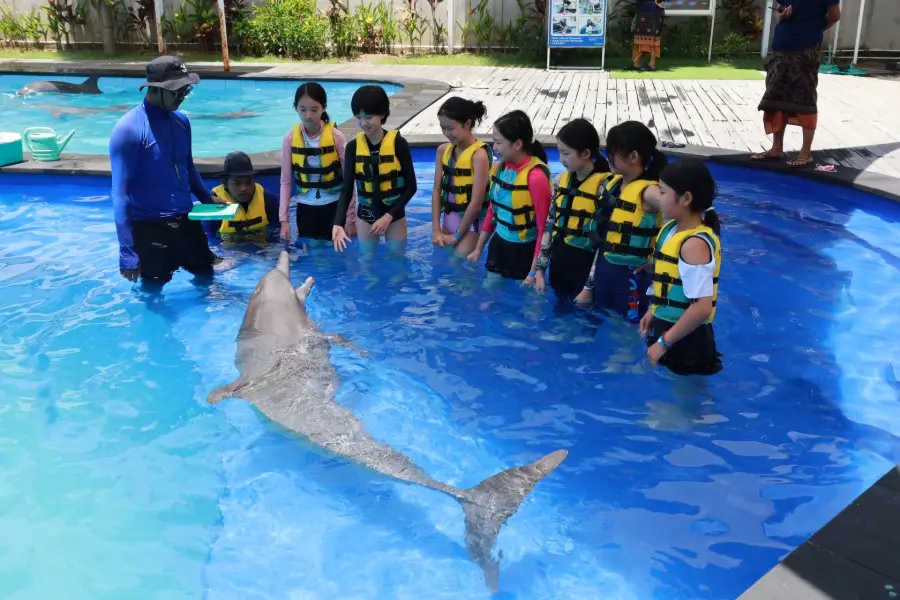
A poolside encounter is a structured interaction designed for guests who prefer remaining on a dry platform, deck, or shallow edge while interacting with marine mammals. Unlike full in-water swimming sessions, a poolside dolphin encounter in Bali centers on close-range observation, guided instruction, and controlled feeding or touching under direct trainer supervision.
This format provides a relaxed, controlled environment where participants can observe animals up close without needing to navigate water depth, buoyancy, or swimming skills. It offers an accessible alternative for guests who want an engaging experience while remaining on solid footing.
For travelers looking into regional options, the Bali Exotic Marine Park Encounter provides a dedicated poolside option. According to official facility details, the Encounter program features a dry or poolside orientation, feeding opportunities guided by animal care staff, direct instructor briefings, and key educational elements about cetacean biology. By keeping participants on the edge of the habitat, the program emphasizes structured learning and observation rather than aquatic exertion.
What to Observe During a Dolphin Encounter
Observing marine mammals from a poolside vantage point reveals intricate physical and behavioral details that can easily be missed while swimming. To get the most from a Bali dolphin encounter experience, guests should focus on several key aspects of animal biology:
- Movement and Swimming Patterns: Watch how dolphins move through the water. Notice the powerful vertical fluke movements—unlike the horizontal tail propulsion of fish—and observe how pectoral fins are used for steering and stabilization.
- Breathing at the Surface: Observe the blowhole located on the dorsal surface of the head. Listen for the distinct, rapid exhalation and inhalation sequence when the dolphin surfaces to breathe.
- Sounds and Communication: Pay attention to the acoustic atmosphere. While human ears cannot hear high-frequency echolocation clicks underwater, visitors can often hear vocal whistles, burst-pulsed squawks, or surface splash signals.
- Responses to Trainer Cues: Watch how the animal perceives visual hand signals, body positions, or target sticks provided by the trainer, followed by the trainer’s use of a bridge whistle to mark correctly completed behaviors.
Evaluating Behavior Without Overinterpretation
When watching dolphins in Bali, it is critical to avoid anthropomorphism—the tendency to assign human emotions to animal movements. A single physical action does not carry a single, fixed emotional meaning:
- A natural curvature of the rostrum gives dolphins a constant “smiling” expression, which is an anatomical feature rather than an indicator of happiness.
- Physical movements like head-nodding, jaw-clapping, or tail-slapping can signify playfulness, territorial signaling, heightening arousal, or simple responses to learned training cues depending on the context.
- Dolphin behavior must always be evaluated holistically within its immediate environment, taking into account preceding cues, social group dynamics, and overall health history.
How to Learn from the Dolphin Trainer
The key to a rich poolside encounter lies in active engagement with the animal care team. Dolphin trainer explanations provide essential context that transforms simple viewing into an educational session.
To maximize your learning experience:
- Listen Attentively to Briefings: Pay close attention during pre-session orientations. Staff explain safety rules, proper hand placements, and spatial boundaries designed to protect both guests and animals.
- Observe the Training Mechanics: Watch how positive reinforcement functions in real time. Notice how primary reinforcers (such as fish rewards) and secondary reinforcers (such as tactile praise or ice) are used to encourage voluntary cooperation.
- Ask Informed Questions: Take advantage of Q&A moments to ask staff objective questions about animal care, such as:
- “How do trainers distinguish between a natural social behavior and a trained operational cue?”
- “What specialized dietary and medical care do the dolphins receive daily?”
- “How do you monitor individual animal responses and choices during sessions?”
- Respect Operational Guidelines: Refrain from making sudden movements, shouting, or attempting unauthorized hand signals. Disruptive behaviors can confuse the animals and interfere with the trainer’s control.
While trainer briefings offer valuable insight into daily management, guests should remember that a brief public explanation does not replace formal long-term veterinary or biological evaluation.
Getting Educational Value from the Experience
A poolside encounter serves as an ideal platform for an educational dolphin experience. By shifting focus away from photo opportunities, visitors can cultivate a deeper curiosity regarding marine ecology.
During your session, focus on developing key scientific insights:
- Recognize Anatomical Adaptations: Observe specialized physical traits, such as smooth, hairless skin that reduces drag, blowhole muscular valves, and counter-shading camouflage (darker on top, lighter on the belly).
- Understand Social Complexity: Learn about fission-fusion pod dynamics, signature whistles, and how wild populations form complex social structures.
- Distinguish Observation from Perception: Practice observing physical actions objectively rather than projecting personal human feelings onto the animal’s actions.
- Build Lifelong Environmental Awareness: Use the encounter as a springboard to research wild ocean issues, such as plastic pollution, commercial fishery bycatch, and marine habitat conservation.
It is important to maintain information balance: simply attending an interaction session or purchasing a ticket does not automatically contribute to wild marine conservation or species rehabilitation unless explicit, verified conservation partnerships exist.
Who May Prefer a Poolside Dolphin Encounter?
A dolphin encounter without swimming is tailored for specific traveler needs and preferences:
- Non-Swimmers & Aquatic Cautious Guests: Ideal for individuals who are not comfortable in deep water or prefer not to submerge themselves.
- Families with Varied Comfort Levels: Offers an inclusive middle ground where family members of different ages can stay together on solid land without feeling pressured to swim.
- Observation-Focused Travelers: Best suited for guests whose primary interest is taking notes, capturing photos from a stable platform, or asking detailed questions of staff.
- Visitors Seeking a Low-Exertion Activity: Great for travelers looking for an educational outing that does not require changing into full swimwear or engaging in strenuous physical activity.
Before booking any encounter, travelers should check facility-specific age restrictions, mobility access, and physical requirements to ensure the program meets their group’s needs.
Planning Your Visit to Bali Exotic Marine Park
If you are considering booking the Encounter program at Bali Exotic Marine Park, thoughtful advance planning helps ensure a smooth and responsible visit:
- Check Official Channels: Visit the official facility website to review up-to-date program schedules, entry guidelines, booking policies, and participant requirements.
- Arrive Ahead of Schedule: Arrive well before your designated check-in time to complete registration and listen to pre-session safety instructions calmly.
- Confirm Photography Guidelines: Verify where personal cameras or phones are permitted, and respect restrictions near animal habitats.
- Follow Staff Directives: Adhere strictly to all staff guidelines regarding touch boundaries, hygiene protocols, and designated viewing zones.
- Consider Animal Welfare Transparency: Prior to booking, conscientious visitors should research venue welfare standards, veterinary oversight, and habitat configurations to make an informed choice.
Important Note on Visitor Reviews and Welfare Policies
When researching destinations online, travelers frequently consult travel forums. You can read Bali Exotic Marine Park reviews on Tripadvisor to gain community insights regarding guest service, cleanliness, and facility layouts.
However, travelers should note that travel platforms like Tripadvisor maintain independent commercial and animal welfare policies. For example, Tripadvisor has specific advisories and booking restrictions regarding certain captive wild animal attractions. Public travel reviews represent individual visitor experiences and corporate platform guidelines rather than validated scientific audits of long-term animal welfare. Guests should consider both visitor reviews and independent welfare standards when making travel decisions.
Conclusion: A More Observant Way to Experience Dolphins in Bali
A poolside dolphin encounter Bali session demonstrates that you do not need to swim in deep water to have a meaningful marine life experience. By remaining on the platform, focusing on precise observation, listening closely to animal care staff, and evaluating behavior objectively, visitors can gain a grounded, science-based appreciation for cetacean biology.
Prioritizing active listening and animal welfare allows travelers to turn a routine outing into a valuable educational milestone. Before making travel arrangements, be sure to verify official program details, check operational guidelines, and research venue welfare standards to plan a responsible visit.
Frequently Asked Questions (FAQ)
1. What Is a Dolphin Encounter in Bali?
A dolphin encounter in Bali is a structured, trainer-led activity where guests observe, feed, or interact with dolphins from a dry platform, shallow edge, or poolside area without swimming in deep water.
2. Can You Enjoy a Dolphin Encounter in Bali Without Swimming?
Yes. Poolside encounter programs are specifically designed for guests who prefer to remain on dry land or a shallow edge while observing animals and listening to educational briefings.
3. What Can You Observe During a Poolside Dolphin Encounter?
Visitors can observe swimming kinematics, blowhole breathing patterns, surface vocalizations, physical body adaptations, and how dolphins respond to trainer cues using positive reinforcement.
4. What Can You Learn from a Dolphin Trainer?
Trainers explain animal training mechanics, positive reinforcement principles, species characteristics, daily dietary needs, health monitoring practices, and the biological context of specific behaviors.
5. Is the Bali Exotic Marine Park Encounter Program Suitable for Families?
The Encounter program is generally suitable for families with non-swimmers, young children, or older adults who prefer a dry, land-based activity. Always check official minimum age and supervision rules before booking.